

The Unsubscribed Digest: Optimized to Death
On casino economies, investor whiplash, and what the French understand about the good life

Finance That Feels explores the psychology of money and the human experience behind our financial decisions — asking why we are the way we are with money, and what it would look like to align our resources with our deepest values and priorities. Because clarity in our financial lives is the foundation of a life well-lived. For more, follow @emiliedayanhill on Instagram.

Being an investor means staying informed. Living well means knowing the difference between signal and noise. Here's what made it past my filter this month — the ideas, conversations, and questions I keep coming back to, in the ongoing project of a life well-lived.
💸 Money Psychology & Behavior
We Are Living in a Casino Economy
I don’t really lose sleep over investing but if there is one topic that keeps me up at night, it’s this one: AI trading bots and the risk they pose in turning up market volatility and permanent capital loss. This Bloomberg piece is a great read. AI trading bots + the rampant rise of prediction markets…I believe this combo is one of the greatest market risks. Speaking of prediction markets, Katie Gatti Tassin calls it the Big Temptation Business Model and she’s right. I wrote about the casino economy earlier this year here if you want to read more.
The Fine Line Between Using AI and Being Used By It
Are we optimizing ourselves into oblivion? I wrote more about this sentiment here.
📊 Finance & Econ 101
Investor Whiplash — And Why You Should Stay the Course
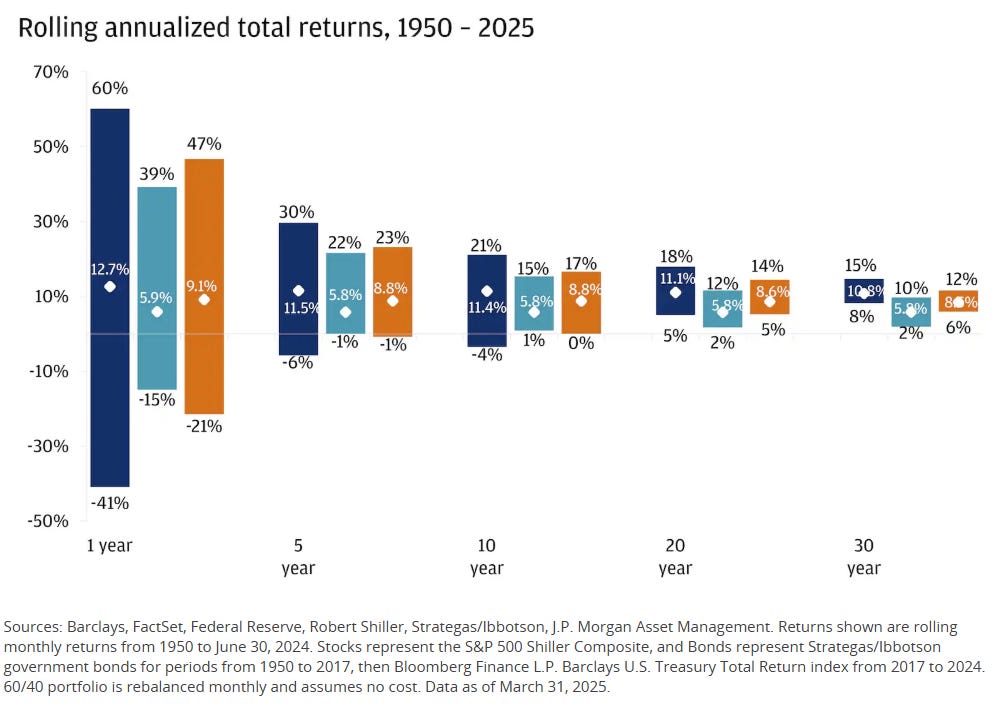
It has felt like whiplash out there. Markets dropped sharply in March, then recovered. The S&P 500 is now up year-to-date — a reminder that in the short term, investing is basically a coin toss. Over 20-30 years, the picture looks very different — the chart below shows that investing in a diversified portfolio for 20+ years literally has a 100% probability of being positive. The uncertainty of life is what creates the opportunity for return. That’s not a platitude — it’s the math.
NYC Wants to Tax Second Homes — And the Wealthy Are Threatening to Leave
Research from comparable cities suggests very few actually do. This Business Insider piece walks through what happened when other places tried it. Paris is proposing something similar — a tax on vacant apartments to address housing availability. The politics of wealth, housing, and mobility are converging in interesting ways right now.
Real Estate Prices: A Slight Slowdown
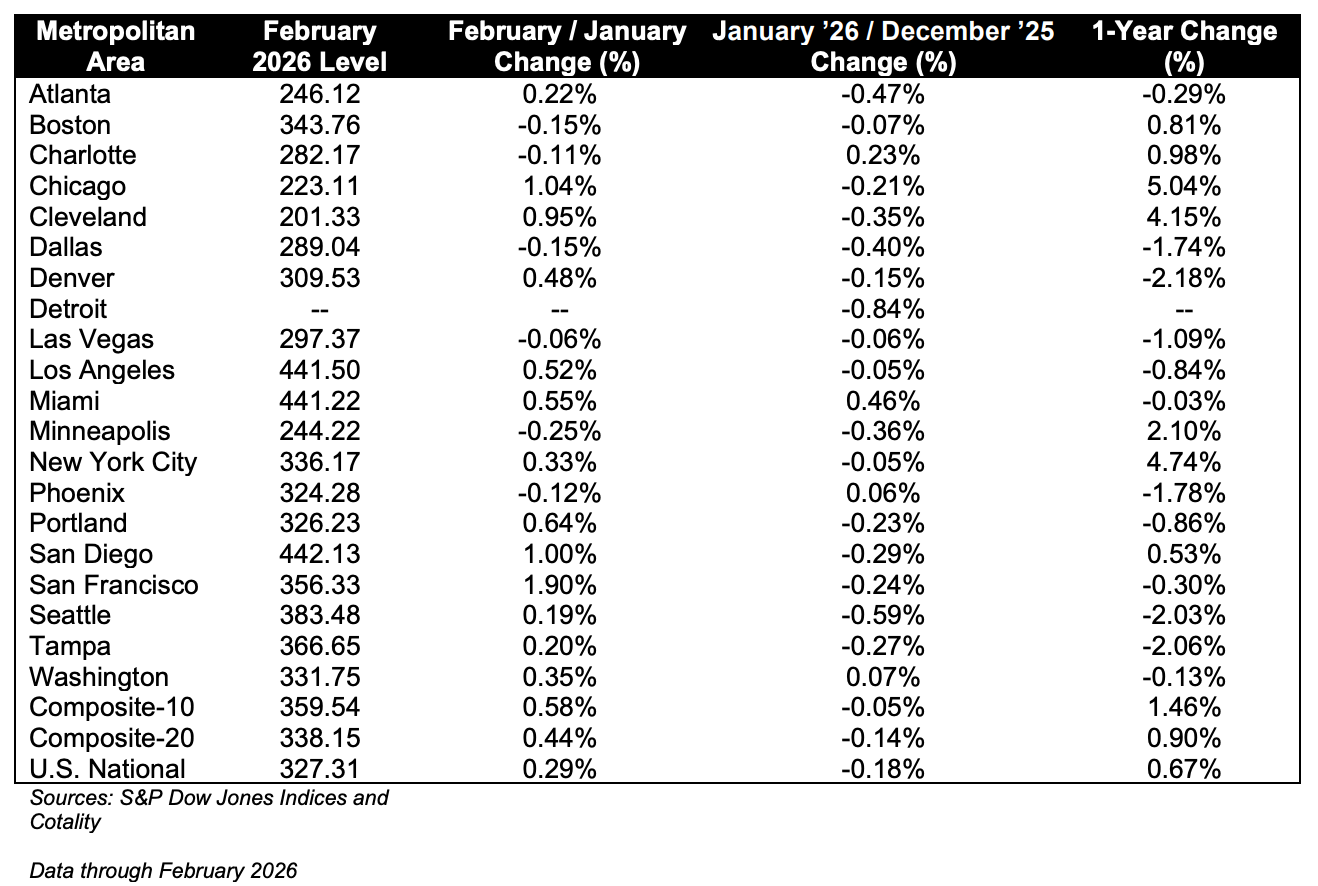
The latest S&P/Case-Shiller data (through February 2026) shows a modest deceleration in home price growth nationally — good news if you’re in the market. Notable: NYC is still up nearly 5% year-over-year. Atlanta, where I’m based, is essentially flat on a one-year basis.
The Mysteriously Missing Brokerage Account — This Is Why the Money Date Matters!
This story is genuinely alarming — and a reminder that even the most optimized financial systems can have errors. Banks and brokerages make mistakes. This is exactly why I preach the Money Date: it’s how you catch what the system missed. I’m also going to start saving year-end statements locally, even when they’re available online. Here’s my Money Date Guide if you want to get started.
What Our Relationship With Taxes Says About Us
A great episode from Anne Helen Petersen with Dr. Ruth Braunstein on Americans’ complicated — and deeply moralized — relationship with taxes, and how that has evolved over our history as a country. Listen here.
💫 True Wealth: Being Human in the Middle of It All
What the French Understand About Money (That Americans Don’t)
I spent the beginning of the month in France on a mother-daughter trip — and it confirmed everything I wrote in this essay. The French relationship with money is less performative and deeply tied to quality of life over accumulation. The financial trade-offs they make — for longer lunches, better bread, more vacation — look irrational by American standards. But maybe they have something figured out.
🌼 On Instagram This Month
If you want the real-time conversation, come find me at @emiliedayanhill. This month we talked about:
The fine line between learning from AI and optimizing ourselves into oblivion
Financial trade-offs for a better quality of life — and what the French get right
Investor whiplash: what the charts actually show
The AI impact on capitalism — join that conversation here
Emilie’s practical guide to Paris
Personal wellness rituals

Thanks for reading. If this resonated, a ❤️ or comment goes a long way in helping my work grow. Find me in real time on Instagram @emiliedayanhill. See you next time.
DISCLAIMER
The opinions of Emilie Hill are solely her personal opinions and not necessarily the opinions of her employer. Social content provided by Emilie is for educational purposes only and does not constitute investment advice or an offer to sell or a solicitation to buy any security.